

Eelgrass in Kachemak Bay, particularly the large meadow in Mud Bay, is a vital yet vulnerable coastal habitat that supports diverse marine life and ecosystem health. It depends on clear, shallow water for sunlight, making it sensitive to pollution, sedimentation, and potential impacts from developments like the Homer Harbor Expansion. Long-term monitoring by Gulf Watch Alaska shows that eelgrass beds vary widely across locations and years but demonstrate resilience, often recovering after declines. Additional research led by NOAA and local scientists aims to establish detailed seasonal maps and better understand changes in eelgrass distribution. Students are also contributing through field studies that assess eelgrass as a foundational species supporting broader ecological interactions. Continued monitoring and community-driven research are critical for protecting eelgrass ecosystems amid environmental change and ensuring the health of coastal habitats and fisheries.
March 31, 2026
Tiny blades, big impact! Importance of eelgrass in Kachemak Bay
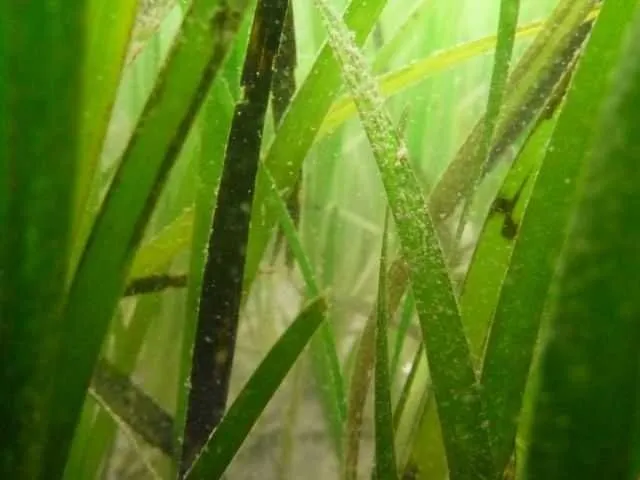
Eelgrass (Zostra marina). (Photo © by Dr. Ross Whippo)